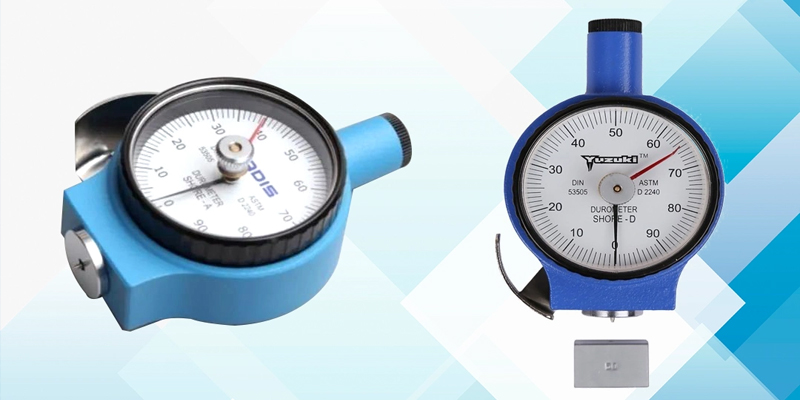
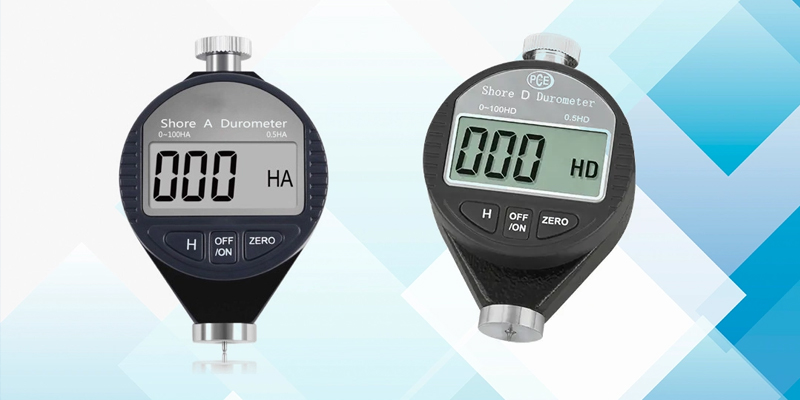
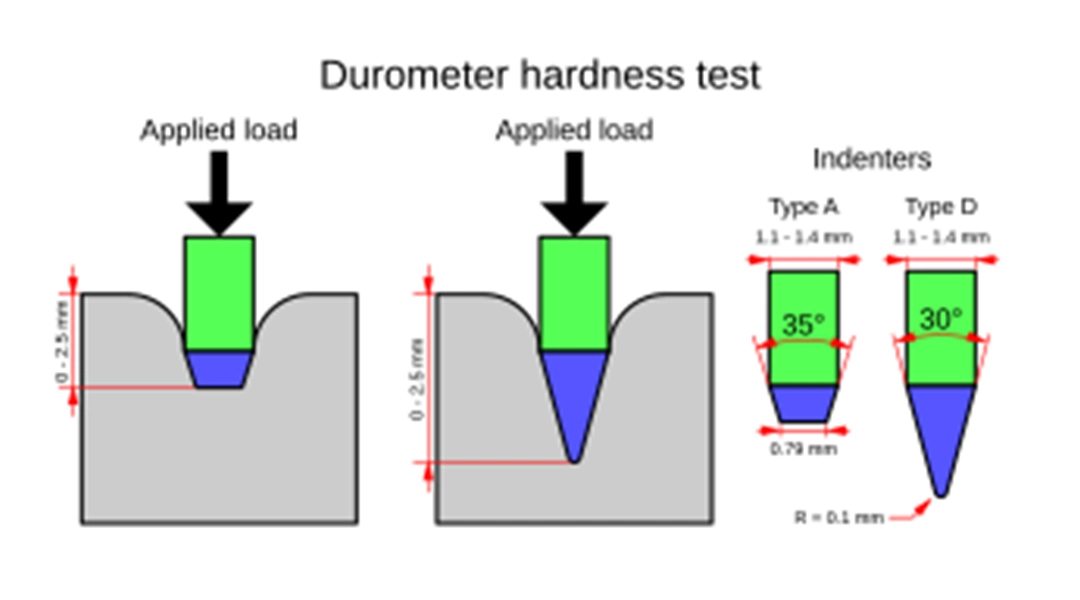
Durometer describes the instrument used to measure hardness, as well as the material’s hardness. Durometer is measured by the depth of an indentation into the material under a standardized force. Softer material will allow a deeper indentation, while harder materials will allow the opposite.
Common scales used today in casting are Shore A and Shore D. Shore A materials are rubbers, while shore D materials are plastics. Durometers range in scales of 10 with acceptable tolerance of plus or minus 5 points. For example, a shore 60 A material will have a lower acceptable limit of 55 A, and a higher acceptable limit of 65 A.
Types of Durometer scales:
There are several scales of durometer, used for materials with different properties. The two most common scales, using slightly different measurement systems, are the ASTM D2240 type A and type D scales.
The A scale is for softer ones, while the D scale is for harder ones. The image of Bareiss digital durometer is shown in the photo.
However, the ASTM D2240-00 testing standard calls for a total of 12 scales, depending on the intended use: types A, B, C, D, DO, E, M, O, OO, OOO, OOO-S, and R. Each scale results in a value between 0 and 100, with higher values indicating a harder material.